IVPORTA QUAESTIONUMMMXXVI · 2026
topic-gate
 Tab. IV
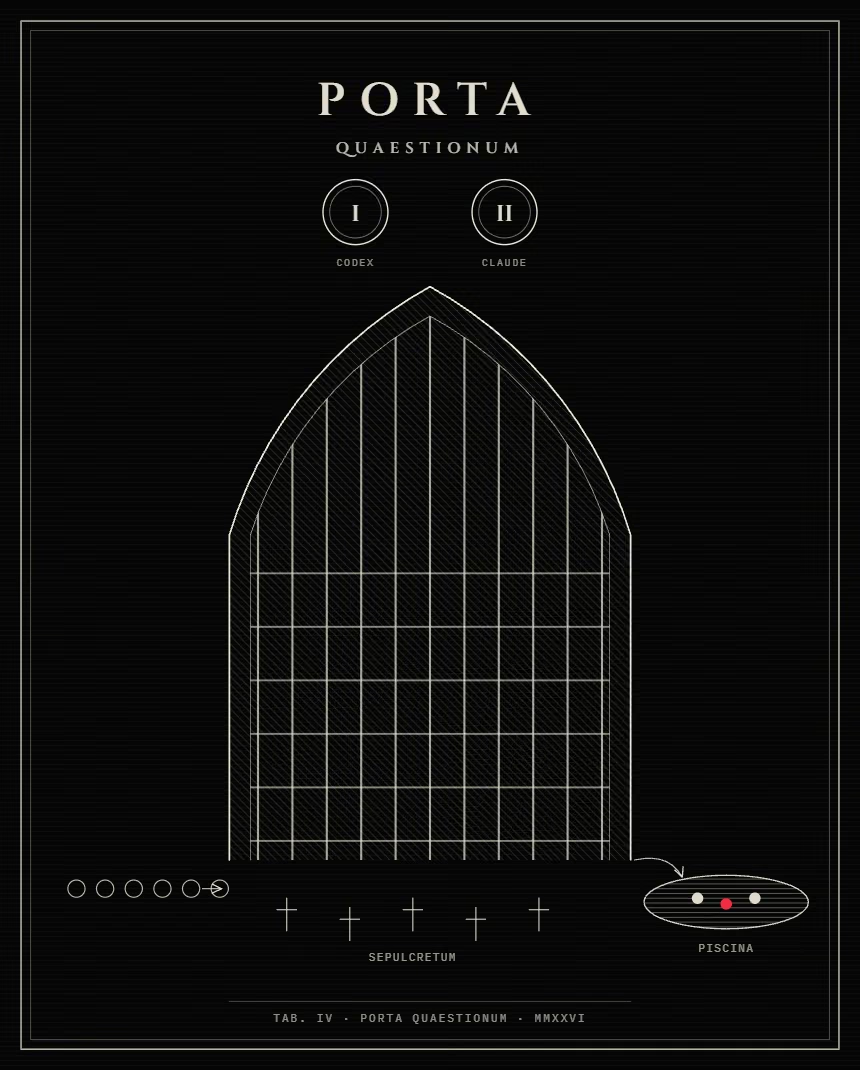
A pipeline that finds research problems for me: an agent proposes them, Codex and Claude review them in turn, and the ones both pass come to me to choose.
Brief
In mathematical research the hardest step is often the first: which problem is worth the time. I used to keep this “topic gate” by hand, and once the candidates piled up, I couldn’t keep up.
Process
topic-gate turns the gate into an automatic pipeline. A topic agent runs in the background, looking for problems in a library of leads. Collectors bring in leads every night from arXiv and elsewhere; each batch starts with a positive self-check, and a collector that fails it is switched off until it is fixed.
Each problem goes to Codex for review, then to Claude. At the top of the lead library is a set of fixed requirements, which the reviewers check against the original text one by one, and which can only make a verdict stricter. Problems both reviewers pass enter the PASS pool, and only when I tick one on the board is it chosen. The rest go to the “graveyard”, each with the reasons it was turned down.
Tags come from a fixed vocabulary, and anything outside it is dropped. That keeps filtering by tag from getting messier with use.
Outcome
Fewer problems get through, and the ones that do are sounder. Many stop halfway and land in the graveyard, but their reasons turn out to be the most useful part: which directions have been done, which conditions are too strong, which question is an old one reworded.
It only judges whether a problem is worth doing; it proves nothing. On Windows, Codex has to run outside its sandbox, so a prompt injection in a web page could reach a shell. The README says so.